WHAT ABOUT LYMPHATIC GADGETS, CREAMS & TOOLS?
JE
WHAT ABOUT LYMPHATIC GADGETS, CREAMS & TOOLS?
I’m very selective about what I’ll put my name behind when it comes to supporting lymphatic flow.
If I recommend something, there needs to be a clear anatomical or physiological rationale for it — not simply clever “lymphatic” marketing.
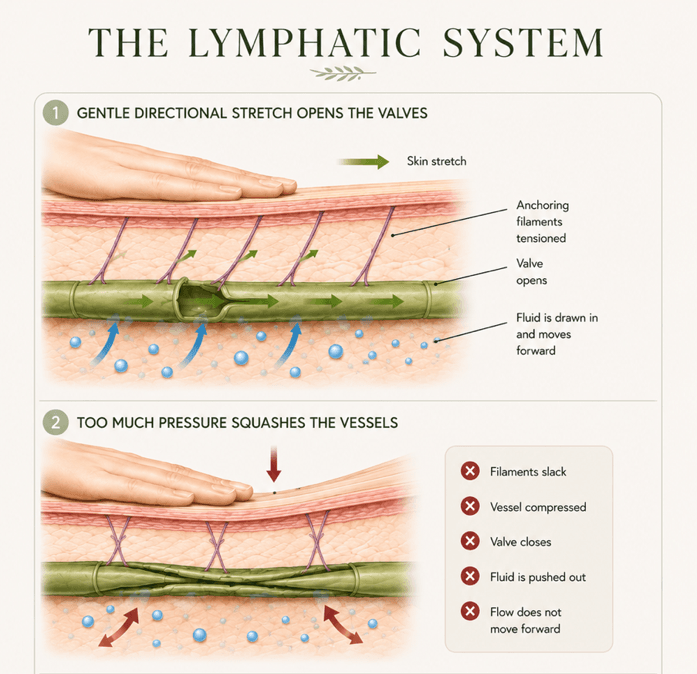
The lymphatic system is superficial, delicate and responsive to very specific types of movement and pressure. So a product being rubbed, rolled or scraped over the skin doesn’t automatically make it “LYMPHATIC”.
Some tools can absolutely have a place. Others may be fantastic for circulation, exfoliation or muscle tension, but that doesn’t necessarily mean they’re moving lymph.
Here are some of the ones I’m asked about most.
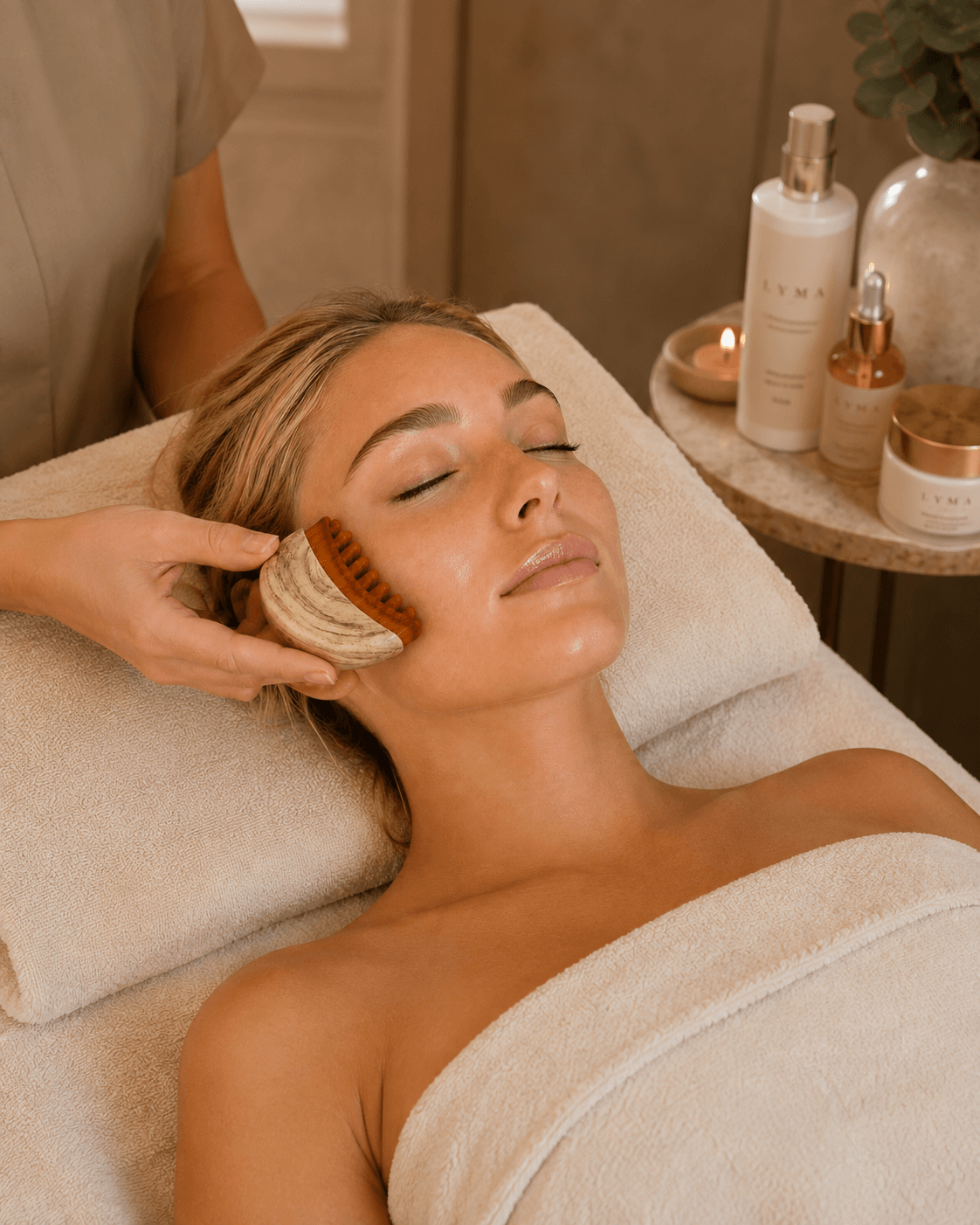
1. Facial lymphatic brushes — YES, but the brush matters
This is one of the few facial tools I genuinely love.
As shown above the initial lymphatic vessels sit very superficially beneath the skin, which is why traditional manual lymphatic drainage uses extremely light, specific skin-stretching movements rather than deep pressure.
A very soft facial brush can provide a gentle sweeping and skin-stimulating action without the heavy pressure associated with many other facial tools.
But softness matters.
A stiff brush, vigorous scrubbing or excessive pressure turns it into something quite different. At that point you may be exfoliating or stimulating circulation, but that shouldn’t automatically be described as lymphatic drainage.
I use a particularly soft style of facial lymphatic brush and, when used gently and in the appropriate direction, I think it can be a lovely addition to an at-home lymphatic routine.
It doesn’t replace manual lymphatic drainage — but it’s a tool I’m happy to put my name behind.
2. Lymphatic creams and night creams — No, a cream can’t physically drain your lymph
This is probably one of the simplest distinctions.
A cream cannot mechanically propel lymph through the lymphatic system simply by being applied to the skin.
That doesn’t mean creams are useless.
Ingredients may moisturise the skin, produce warming or cooling effects, support the skin barrier or make massage more comfortable.
But those are properties of the cream.
If lymphatic movement occurs while applying it, the more plausible explanation is the movement of the hands and tissues — not that the cream itself has somehow begun draining the lymphatic system.
So when I see a topical product promising to “flush lymph”, “drain toxins” or stimulate lymphatic drainage simply through its ingredients, I’m going to want considerably more evidence before putting my name behind that claim.
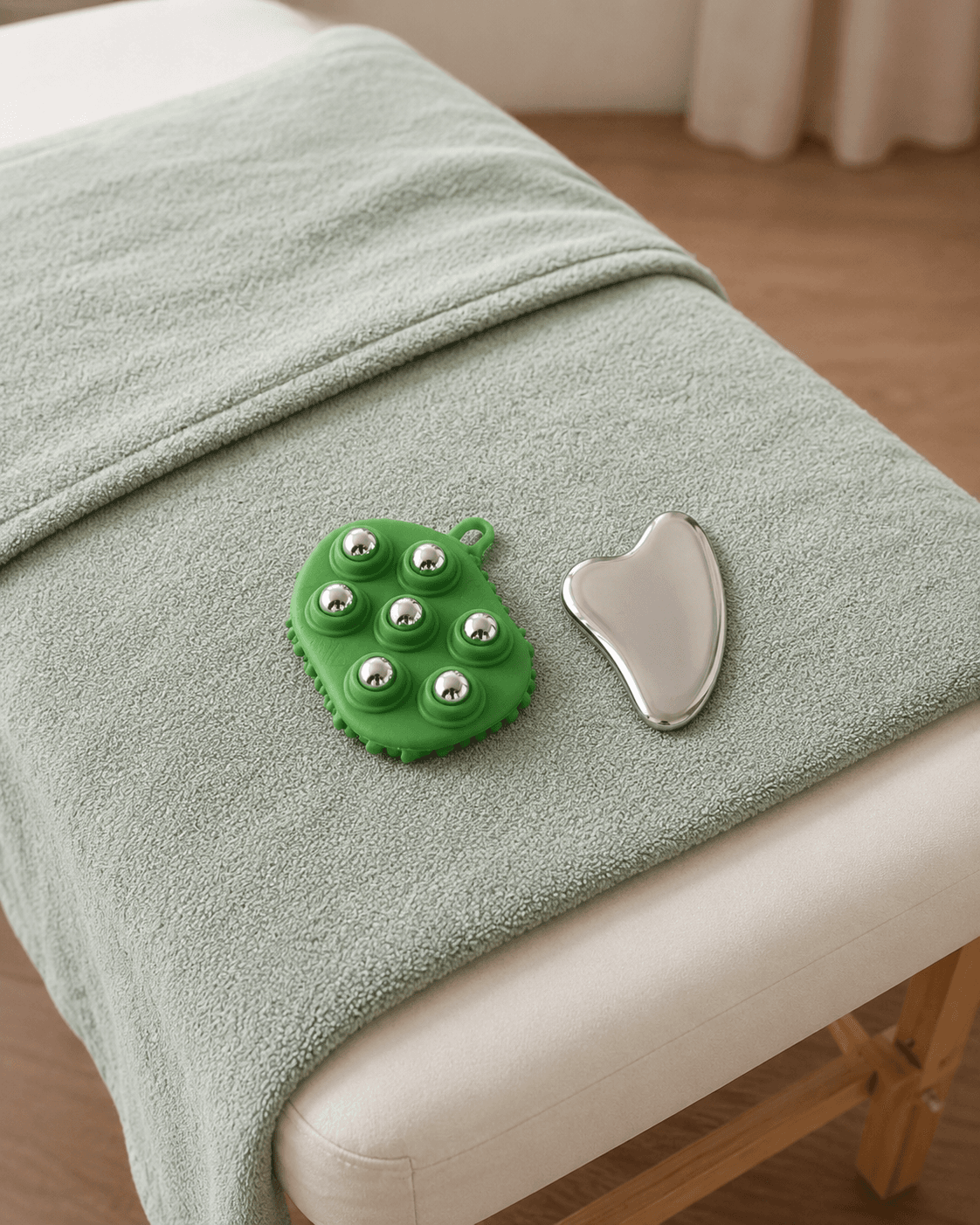
3. “Lymphatic” gloves and mitts — I’m not convinced!
You’ll see plenty of textured gloves, mitts and body tools sold specifically for “lymphatic drainage”.
My issue isn’t necessarily with the product itself.
A textured glove can exfoliate the skin. It can stimulate local circulation and can feel great. But that does NOT automatically make it a lymphatic tool.
If a glove requires vigorous rubbing or significant pressure, I struggle with the claim that this mimics the principles of lymphatic drainage. Superficial lymphatic vessels don’t require forceful manipulation and more pressure certainly doesn’t mean more drainage.
So should you use one because you enjoy how your skin feels afterwards? Absolutely.
Should you use one for improved circulation? Absolutely.
I just wouldn’t buy one purely because somebody has written “lymphatic” on the packaging.
4. Gua sha — fantastic for circulation, but that isn't automatically lymphatic drainage
I actually like gua sha.
There is research showing that gua sha can substantially increase microcirculation in the area being treated, so there is a legitimate physiological conversation to have around circulation.
Where I become more cautious is when every gua sha technique gets labelled “lymphatic”.
Traditional gua sha can involve considerably more pressure than we would normally associate with manual lymphatic drainage.
Could a gua sha tool be used extremely lightly to create gentle movement of the skin? Potentially.
But that's a very different technique from scraping firmly across the tissues.
So for me:
Gua sha for circulation? Yes.
Gua sha used extremely gently as part of a lymphatic-inspired facial routine? Potentially.
Heavy scraping described as lymphatic drainage? That's where I become sceptical.
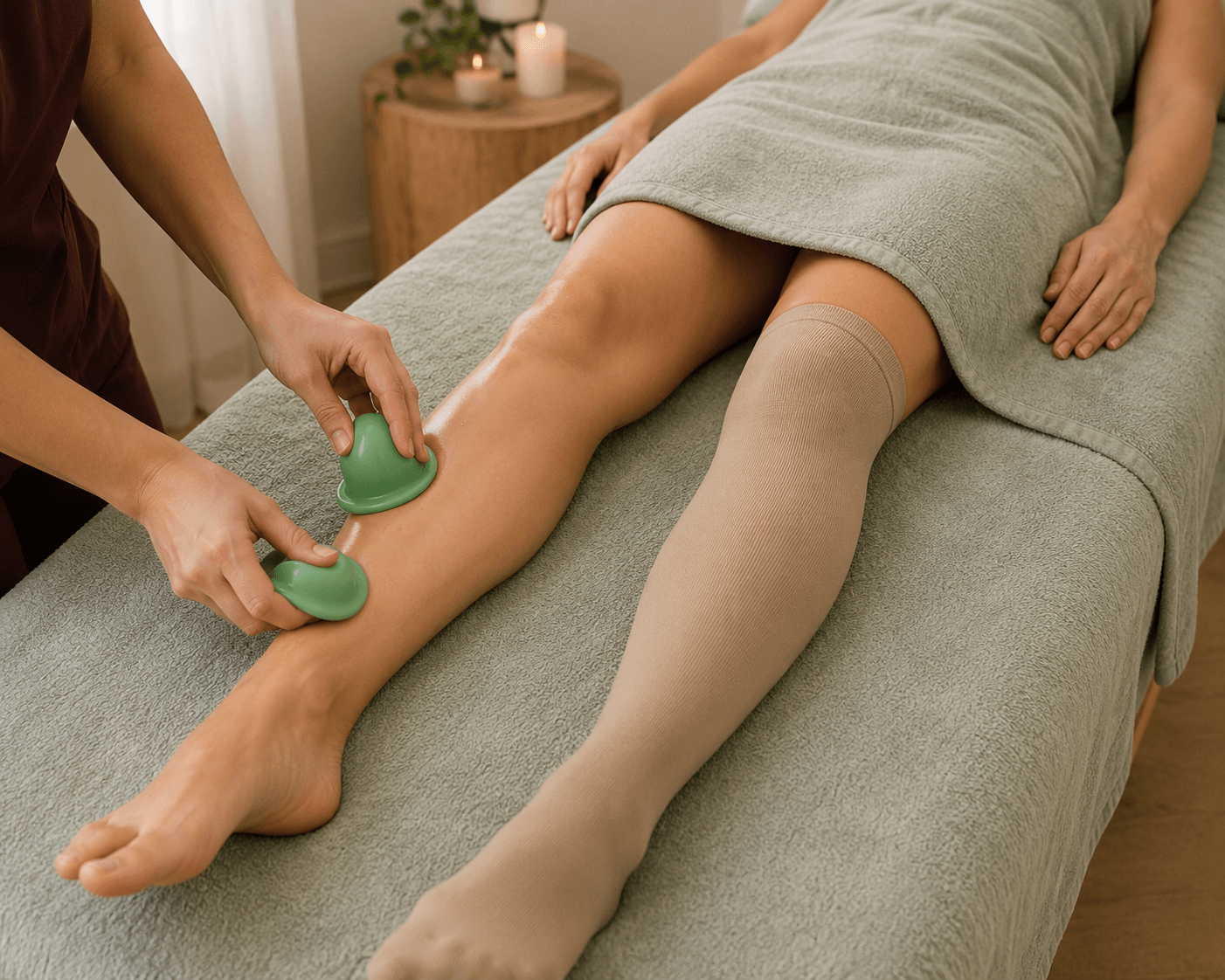
5. Silicone gliding cups — potentially, but LIGHT is the important word
Silicone cupping is an interesting one because the mechanism is quite different from simply pressing into the tissues.
The cup creates negative pressure, lifting the skin and superficial tissues rather than compressing directly downwards. Research into cupping supports effects on local blood flow, although the evidence specifically establishing cupping as a lymphatic drainage treatment is far less developed.
This is why I think technique becomes incredibly important.
Very light suction with a continuously moving silicone cup is completely different from strong stationary cupping designed to create significant tissue decompression or bruising.
When we're talking about superficial lymphatics, I don't believe more suction equals a better result.
I'm particularly interested in light gliding techniques — both for the body and, with appropriately sized cups, the face — where the objective isn't to drag aggressively through tissue but to create gentle superficial movement.
This is also an area where I want good practical training behind what I'm doing rather than simply buying a set of cups and calling the treatment “lymphatic”.
So for me, silicone cupping is potentially very useful, but only when it's appropriately trained, appropriately applied and not overclaimed as something it isn't.
6. Compression socks — YES. This one has real physiology behind it.
Compression is very different from many of the products that simply borrow the word “lymphatic”.
Compression garments have an established role in the management of venous and lymphatic conditions, including lymphoedema. Evidence and clinical guidance support the use of medical compression stockings in appropriate patients.
Graduated compression applies external pressure to the limb and can help limit fluid accumulation while supporting venous and lymphatic return.
And importantly, it works beautifully alongside movement.
Every time the muscles of the legs contract while walking, they contribute to the pumping mechanisms that help move fluid back upwards through the body. Compression can provide external support around that process.
That doesn't mean everybody needs medical-grade compression stockings, and the appropriate level of compression matters — particularly if somebody has underlying vascular or medical conditions.
But physiologically?
Yes. There is absolutely a reason compression has a place.
For everyday use, travel, prolonged standing and people prone to heavy or swollen legs, appropriately selected compression garments are one of the products I consider far easier to justify anatomically than many of the gadgets being marketed as “lymphatic”.
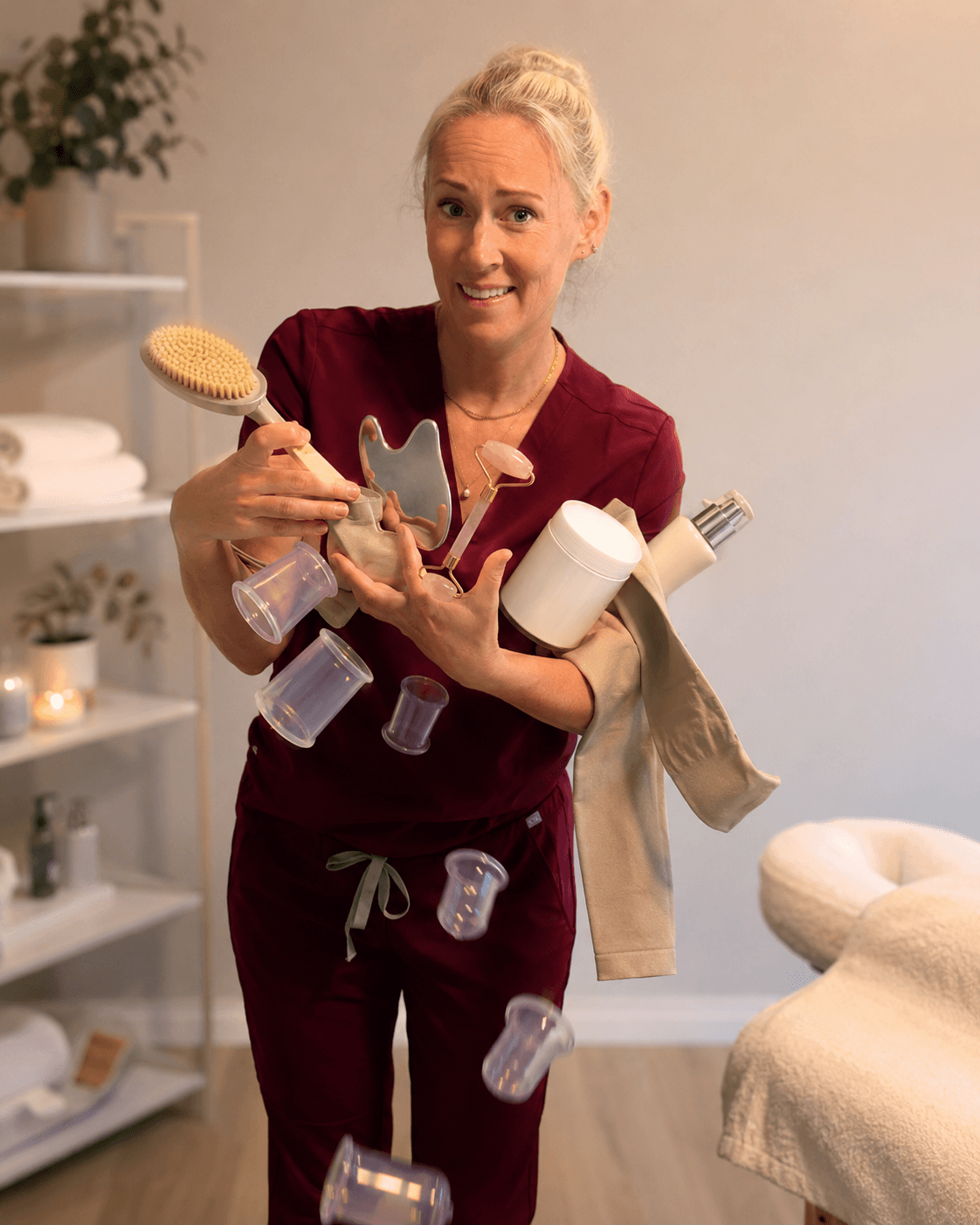
So, am I anti-gadget?
Not at all.
I'm actually very open to tools that make sense. But I want to be able to know:
What is this actually doing?
How much pressure is being applied?
Which structures are we trying to influence?
Is the proposed mechanism anatomically plausible?
And is there evidence behind the claim being made or have we simply put the word “LYMPHATIC” onto something that already existed?
Sometimes a tool is genuinely useful and sometimes it's great, even if for a completely different reason than the marketing suggests.
But sometimes, frankly, it's just MARKETING!
I honestly believe that the lymphatic system is fascinating enough without needing to make things up. So do your research and if the science behind it is saying otherwise, its probably just another gimick!
And what about red light therapy?
That one gets its own blog.
Because unlike many of the gadgets marketed as lymphatic, photobiomodulation has a much broader and more complex body of research behind it — and the relationship between red/near-infrared light, circulation, tissue recovery and the lymphatic system deserves a proper discussion rather than a paragraph squeezed in here.
Coming next…